craft fairs, needle felting, Uncategorized

Makers Markets – a look at how far I’ve come and hopefully some tips for you!

Hi, looking back through my old blog posts I realised that I’ve come a long way since I last posted about markets and craft fairs!

Hopefully this post about how I have developed my display is useful, but my original post “How to Survive a Craft Fair” still has a lot of basic “good to know” tips for beginners so take a look at that too if you’re just starting out.

February and March 2023 saw me at two new (to me) fabulous and popular Markets in Liverpool, Good Market at Penny Lane and Mossley Hill Makers Market.
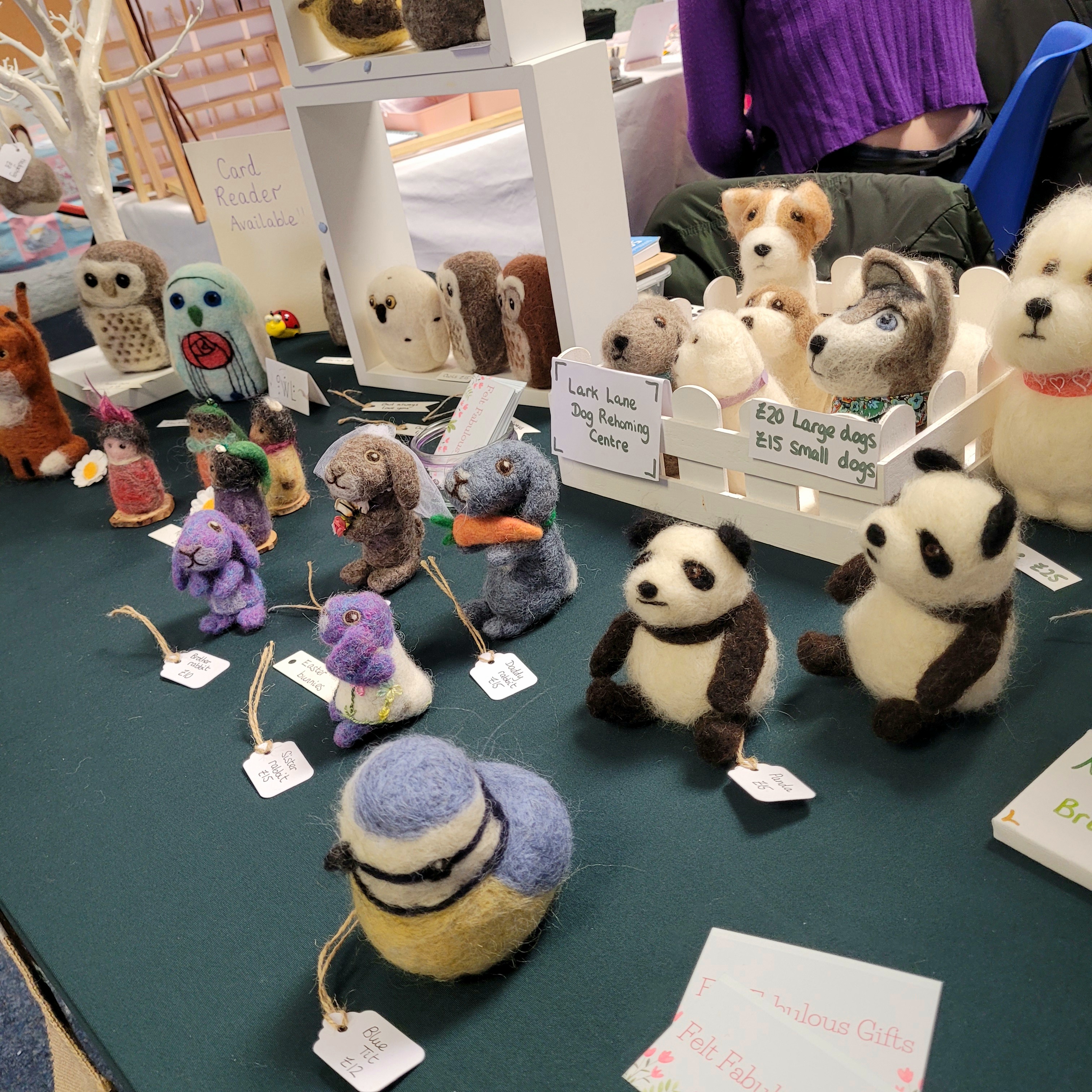
What have I improved on since the beginning?

Apart from the obvious change in quality in my creations, the natural progression that is seen when you work at a craft for many years, the appearance of my stall has improved. Here are a few (useful I hope) tips based on things that I have learned since I started out.

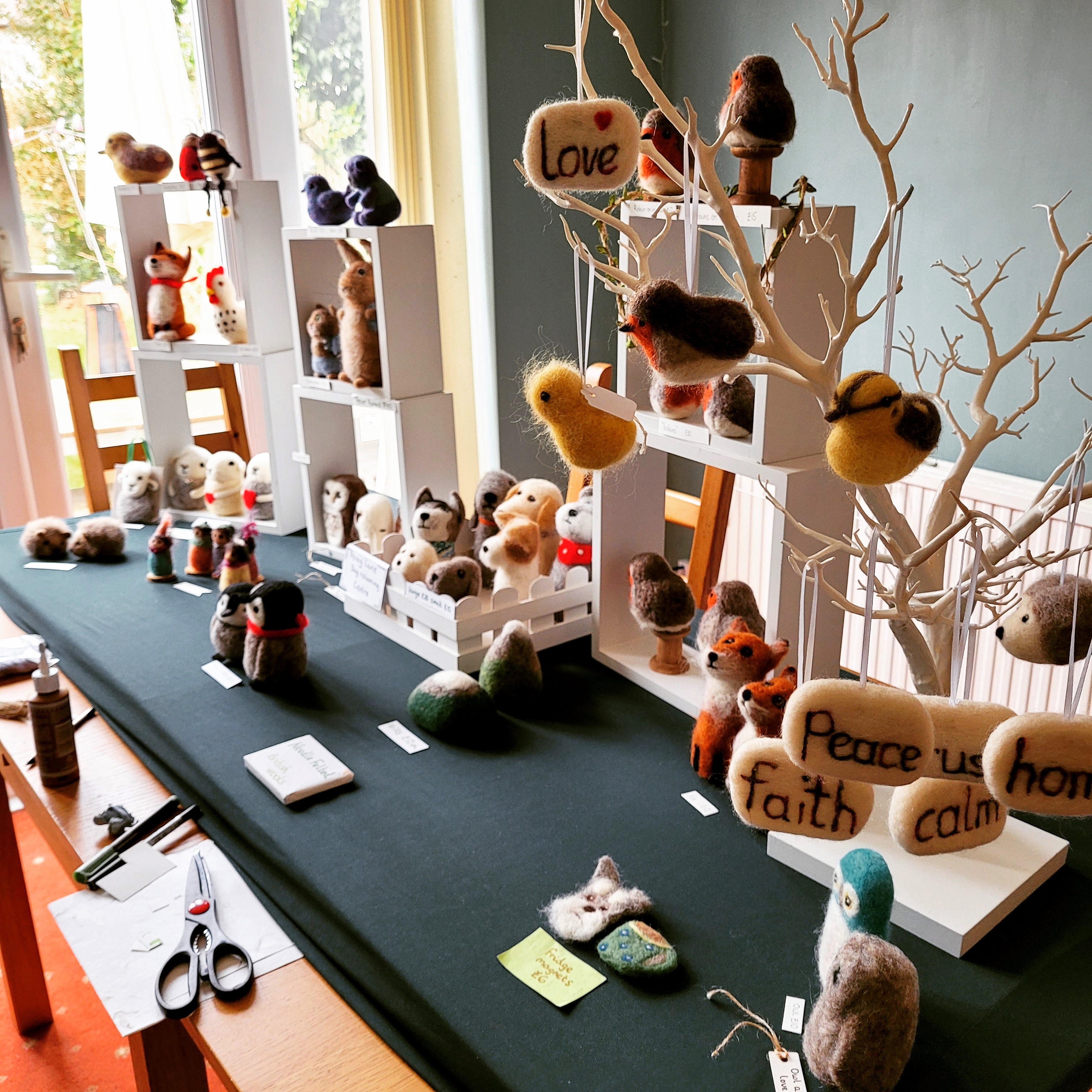
Display It’s good to have variety of height in your display. I have resourced and twiddled with boxes, shelf units and branches in my displays over the years to achieve variation in height so that some items are nearer eyeline. To keep a clean look, all my additions are white.

Think about investing in one of those stretchy table covers that helps to hide what you have stashed underneath the table. It can help your stall look more professional and together.

Have a display item that helps people stop and look. Have a talking point – I put some of my felted dogs in a small crate labelled Dog Rehoming Centre with the name of the area in front of the title. It makes people stop and smile and talk!

Don’t put too much out! Hold back from putting out everything you have ever made. It can make it too busy and confusing. Group in themes, keep it simple and pleasing to the eye. I have a box of additional items with me so that I can put extras out as items start to sell, or maybe change a couple of items part way through if something isn’t working. Watch what people look at, if some items just aren’t catching people’s eye, try something else. Use this craft fair as a chance to do valuable market research.

Practice your layout beforehand. If it has been a while since your last market, if you have a lot of new products, and definitely if it is your first ever craft fair, have a run through first. Measure out the space you will have on a dining table, workbench or even floor, and work out how what you will put out and where it will go for best effect. View it from different angles. Get a second opinion. Take photos! This can help you feel much calmer and more confident on the day.

Price points I have learned what items catch people’s eye and causes them to stop and look, and the sweet spot where they are likely to make a purchase.

You might have a quality item that took you hours to make and that you have priced accordingly, that might not sell in the venue you are in, but, it shows your talent and what you are capable of, and people will stop and see what else you have. They may just take a business card and bear you in mind for that special birthday or Christmas present.

Your sweet spot price point will vary according to the particular market, season and area. It might take you a while to figure out what it is, but when you do, aim to make lots of items at that price point. For me it meant thinking about my designs and how I could make items more quickly. But do have a range of prices, I sometimes have “stock clearance” type baskets with sale prices of items that I made a while ago and just have not sold. People do love a bargain and it will help you make your table cost back and clear some space at home!

Venue Before applying, do a bit of research first. What have previous markets been like, who has sold there and how have they found it? (Instagram posts and comments can help with this!) Is it indoors or outdoors? I know I could never have an outdoor stall as my items are so light they would blow away on a windy day!

It can be disheartening to have a stall at a fair with a very light footfall so how well advertised is it and is it in a busy area with lots of people about who are likely to pop in?

Future markets Popular markets have an application process and they may want to see what your usual display looks like. So when you are all set up and your stall is looking gorgeous, don’t forget to take lots of photos to use in future applications and to show off on social media.

What about you?

I’d love your feedback on what has worked for you! Or maybe from a customer’s point of view if you love visiting craft fairs and makers markets. Please comment below.

felted mobile, needle felting, Uncategorized

A Bespoke Nursery Mobile

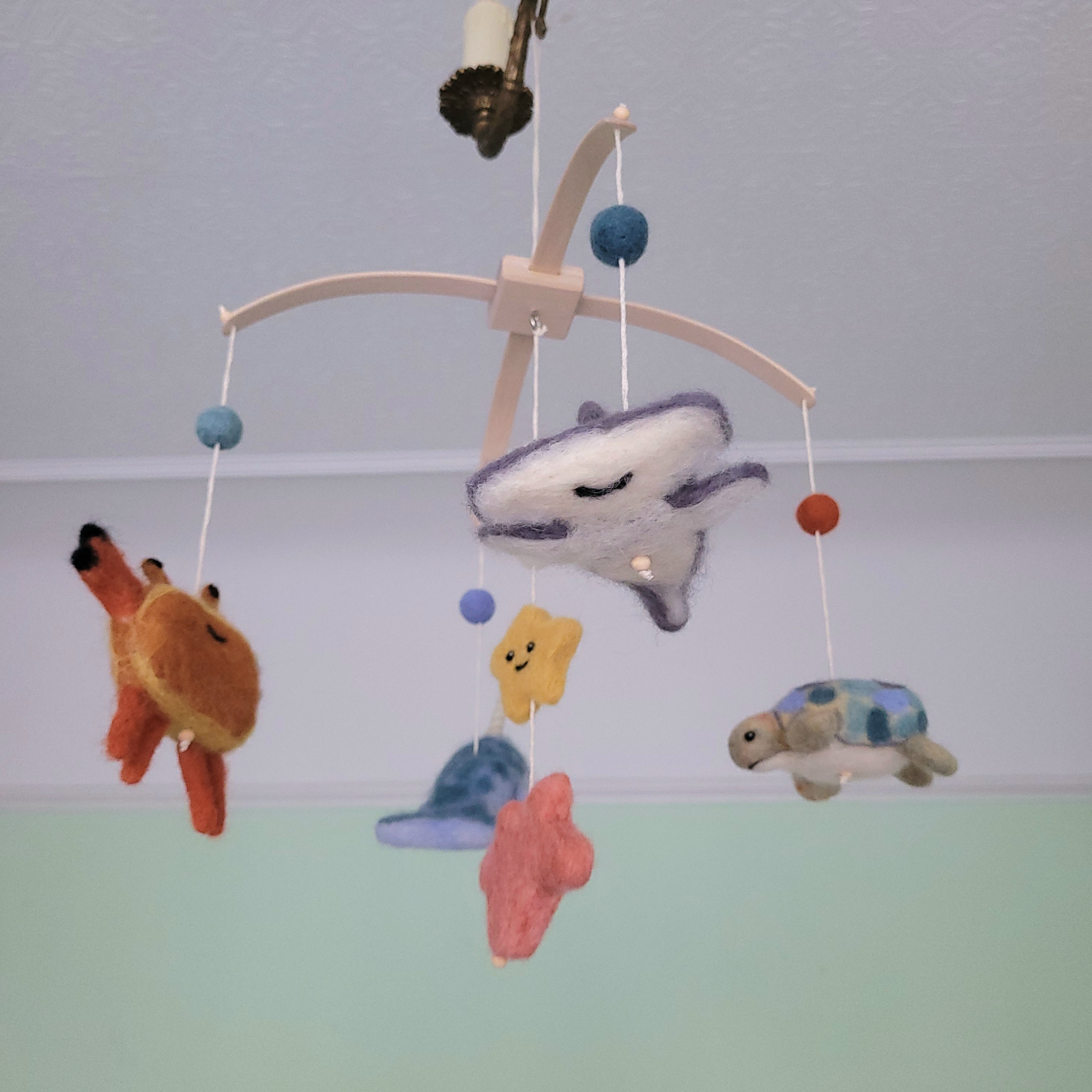
I love it when I get custom requests as it really grows me creatively. I have made a sheep mobile before (see earlier blog posts) but something so far has prevented me from offering it to the world. When asked if I made needle felted baby mobiles from someone who had seen my work at a craft fair, I jumped at the chance to make one. It is something that has been simmering at the back of my brain to do for a while now.

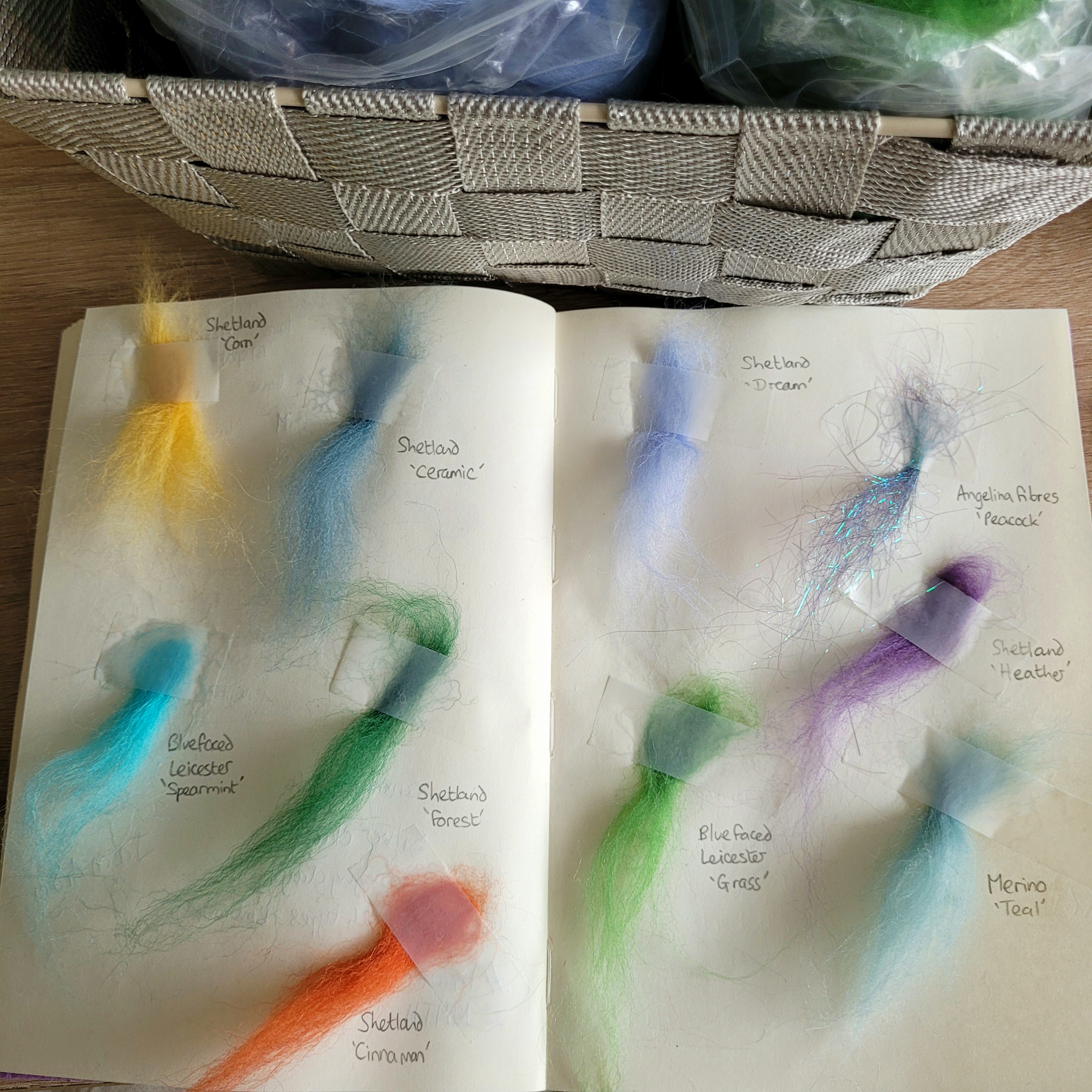
We messaged via Instagram direct messages to discuss a theme and colour scheme. I have quite a collection of British and merino wools and was able to show a few possible colour combinations before we arrived at a chosen colour palette.

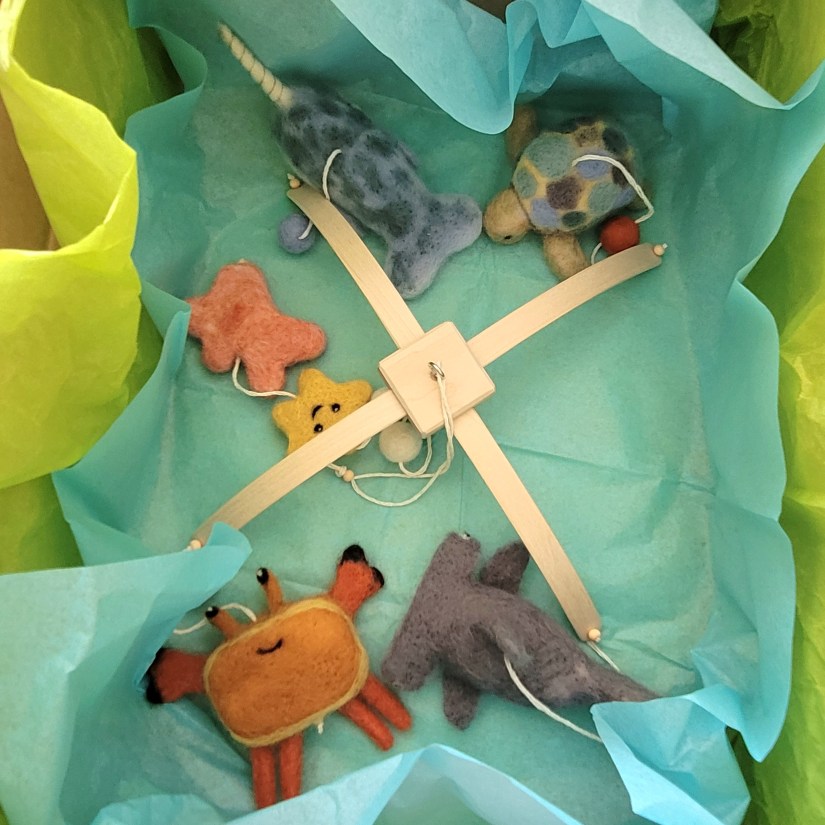
My client wanted an underwater theme so we discussed her favourite creatures and then I started work on a few shapes to show her. I made a couple extra than I knew was going to fit on the mobile to provide choice, and because I was having so much fun making them!

some sea creatures in the making…

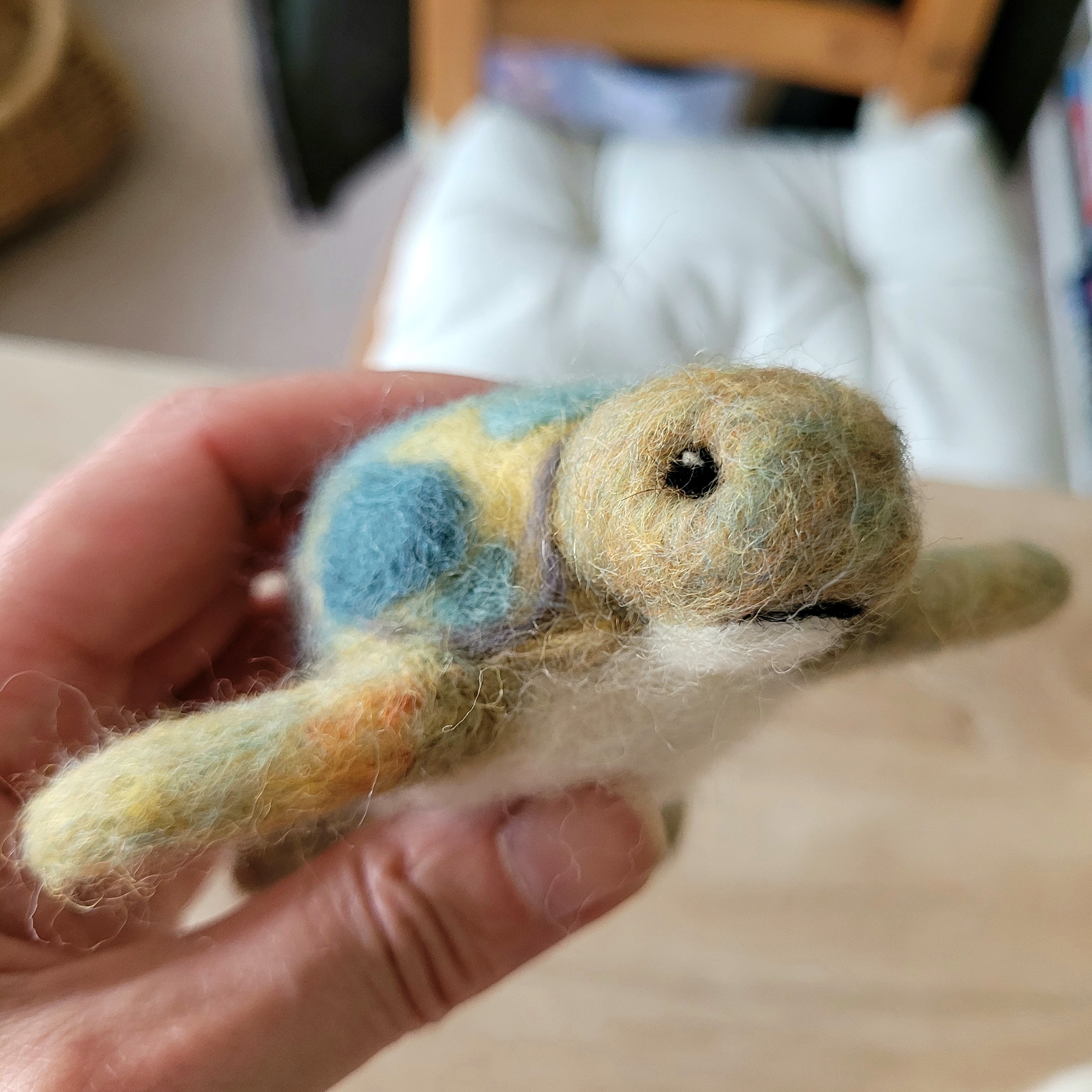
These shapes were felted using Shetland batt wool. Once I checked that my client was happy with the way things were going, I began to get creative with the finished designs, adding colour , pattern and features. I love watching their characters emerging!

Favourites were selected (which ones would you have chosen?)

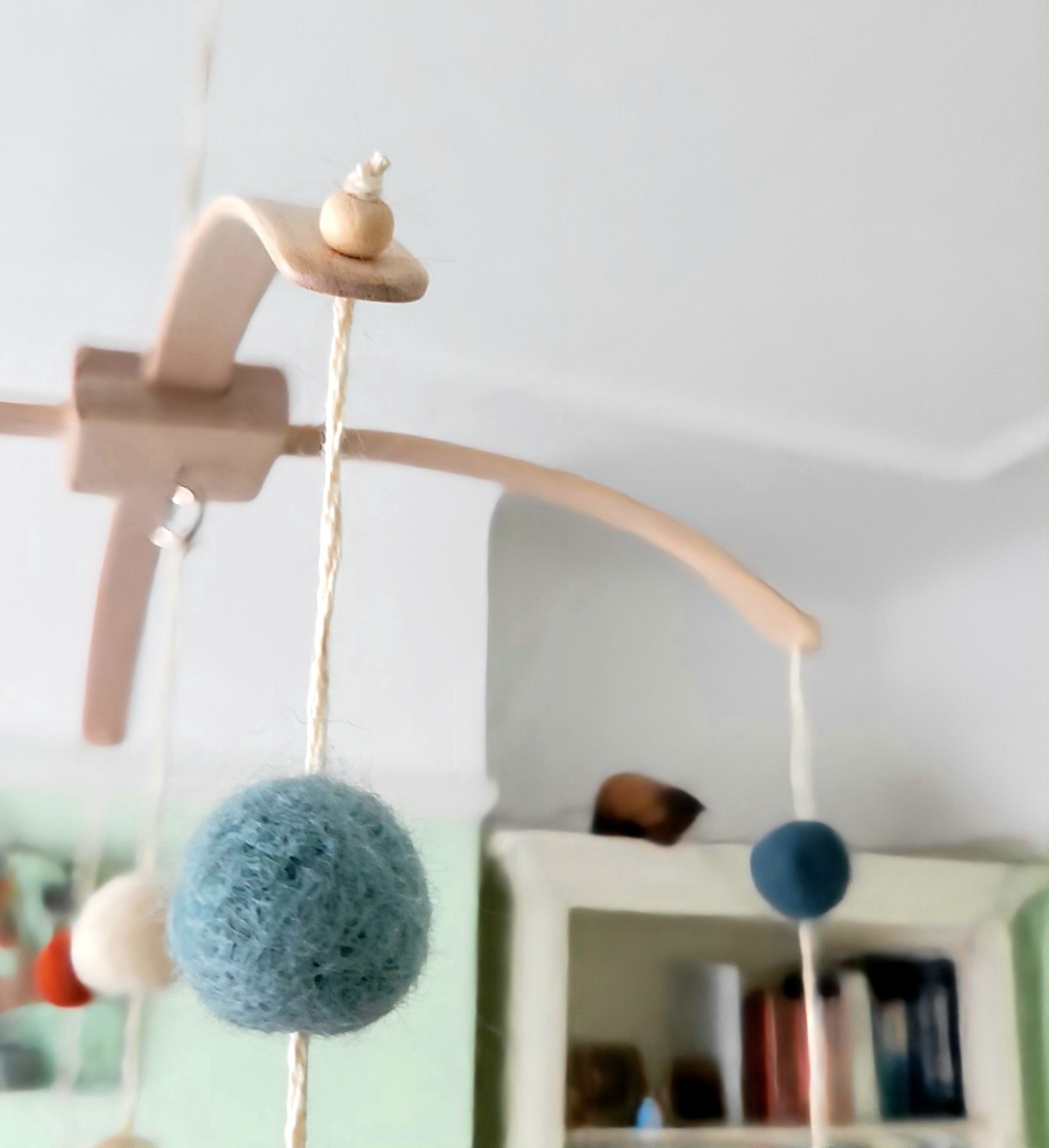
Next step was to choose a mobile frame. For my sheep mobile I hand wove strips of willow. I wanted to turn to my fellow creatives for this one though and researched some frames from Etsy sellers. I showed my client some options and this gorgeous wooden handcrafted one was selected.

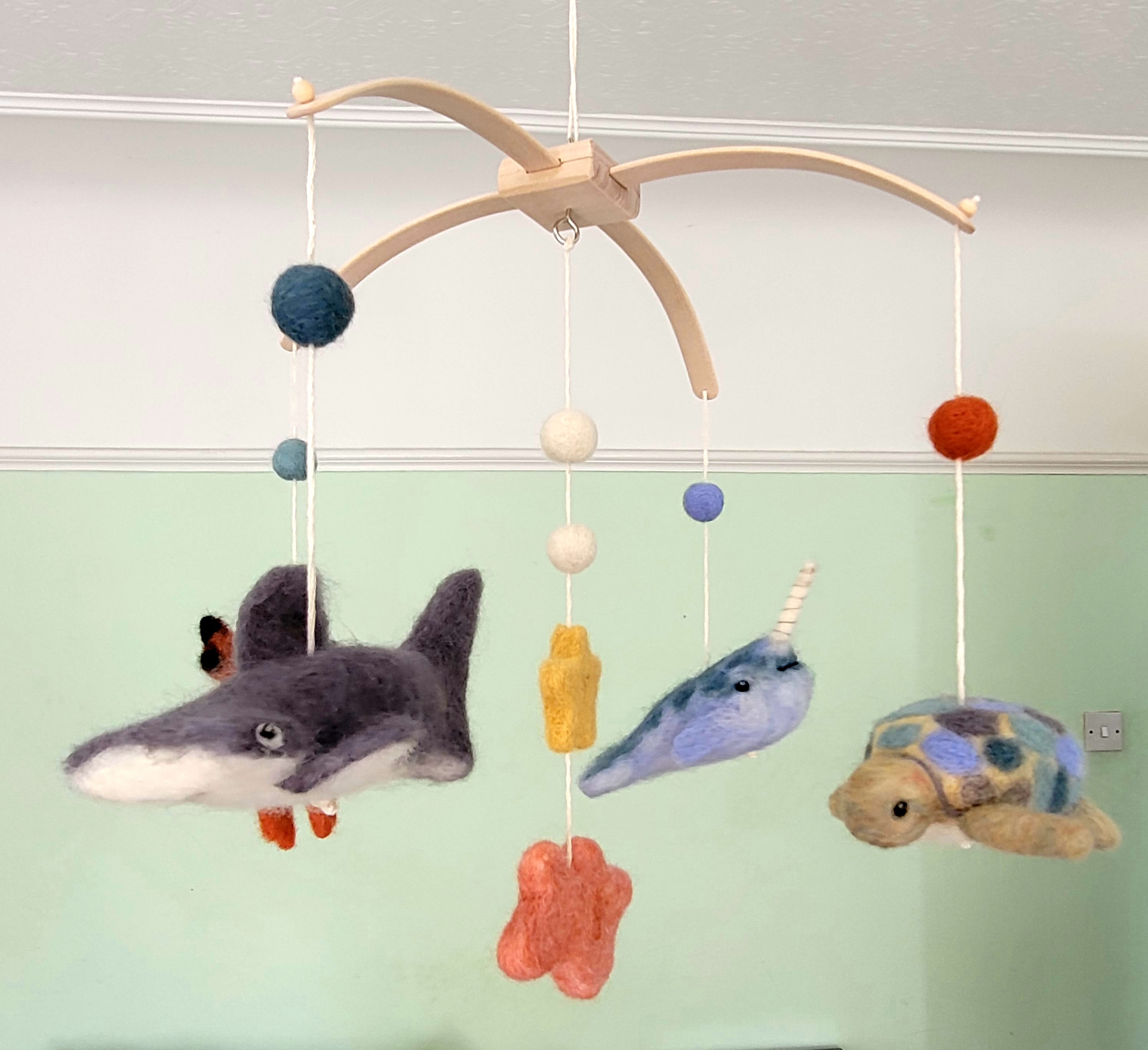
Stringing them up using the unbleached string provided with the mobile, was a lot easier than I anticipated and I soon had a complete mobile to show.

All done, photographs taken, videos made, it was time to box it up. And as the client was local, ready for collection!

Custom orders

If you would like me to work with you to make a cute and quirky, bespoke hand made and felted mobile, maybe you are expecting yourself or a grandparent-to-be, please get in touch. I would love to chat ideas with you! Please complete the contact form or find and message me on social media.

@feltfabulousgifts

custom dogs, dogs, felting with fur

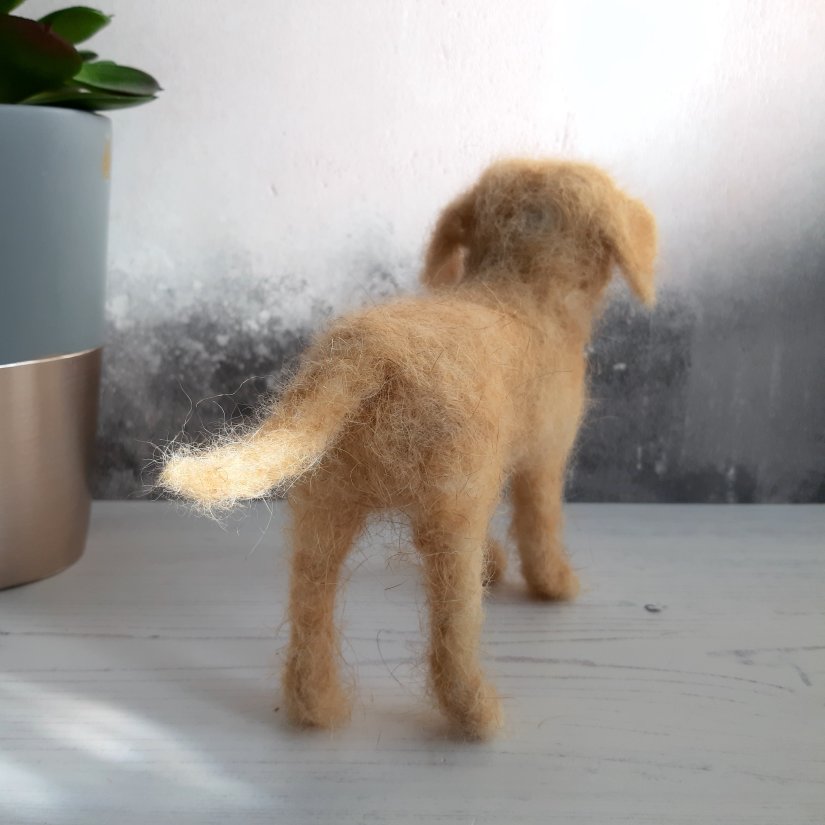
Dog fur or hair? What’s the difference?

When I started working with dog fur/ hair to create needle felted dog replicas, I became curious about the difference between dog hair or fur. What to call this new material I was working with, were those two words interchangeable? Was there a difference?

OK, so now I now there is a difference and I shall attempt to explain that in this post.

So there is no chemical difference between hair and fur, they are both made from keratin. They can however differ in texture and growth cycles.

Hair

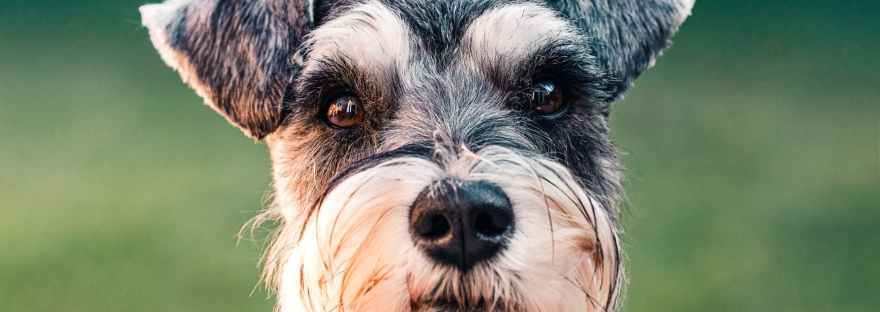
Examples of dogs with hair include Poodle, Bedlington Terrier, Schnauzer Bearded Collie and Bichon Frise.

Hair can be straight, wavy or curly and generally feels smoother and finer. It tends to be longer and thicker than fur. Hair grows in a single layer rather than in a double coat and goes through a longer growth cycle. Because of this longer growth cycle, dogs with hair shed less frequently, this leads to people with allergies choosing them over dogs with fur, though this doesn’t always solve the problem! Dogs with hair might need more grooming (as in doggie haircuts) so that their hair doesn’t get too long.

Fur

Dogs with fur include Golden Retriever, Labrador, Newfoundland, Pomeranian

Dogs with fur have shorter growth cycles so they shed more frequently, this is so that they can change the thickness of their coat depending on the season. The fur is finer and denser than hair and often grows in a double coat with a coarser overcoat over the finer undercoat. This helps them to regulate their body temperature. So dogs with fur seem to be more adaptable to changing climates and weather. Their fur is shed before it gets too long so less visits to the dog salon!

So I now know more than I did and I hope you do too! If you want to get in touch about your dog or to enquire about my work with dog fur, I would love to hear from you!

Please use the contact page to get in touch!

Amanda x

custom dogs, felting with fur, needle felting

Felting With Fur – part 2

Hello, I absolutely love felting with fur! It opens up so many possibilities, and provides such as special felted keepsake for the animal’s owners.

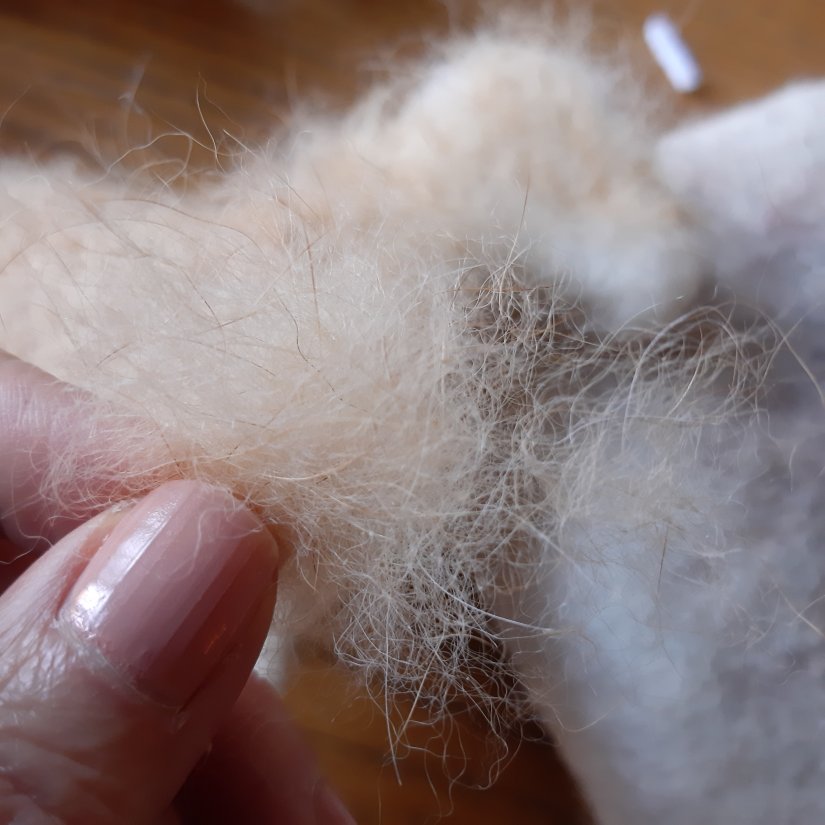
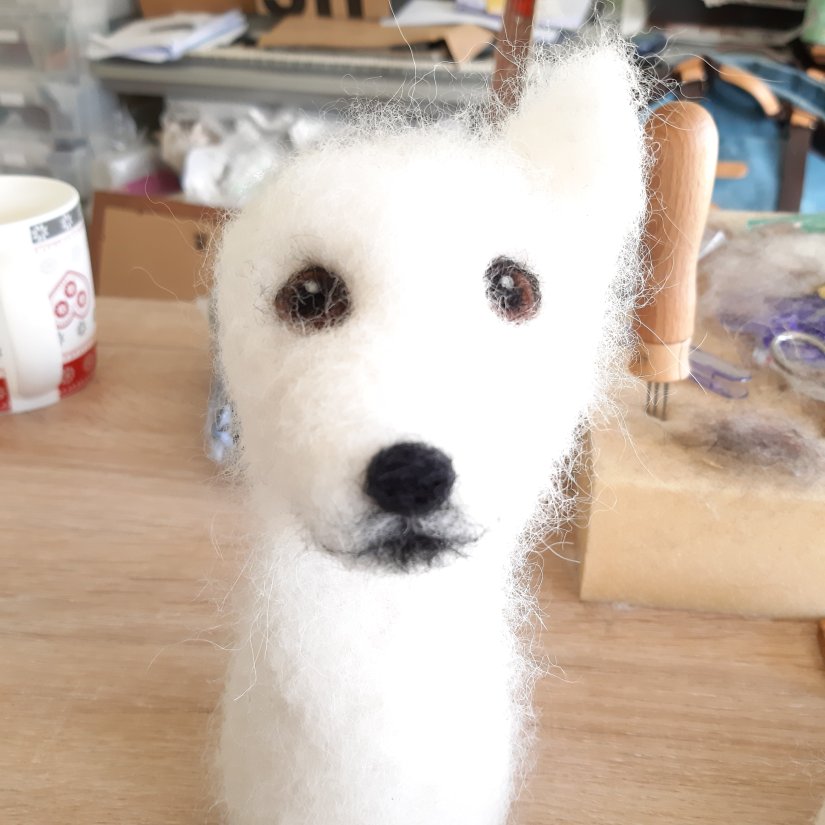
For this dog replica I was lucky to have such a lot of fur to felt with, and it was so soft and feltable! This fur was from a much loved Japanese Spitz and the crimp of the fur very closely resembled the sheep wool I felt with.

Because of the quantity and texture of the dog fur I was able to start by felting a whole body and head from it. It might not have created as firm a shape as I can achieve from felting with wool but this fur certainly provided a good core as a base.

I felted the ears and the face.

The features were the only part of the dog that had to be created with wool. Once the ears and the face were completed, I set about gently building up the fluff to give the dog the shape needed for this particular breed.

And here he is, the finished dog, a very special make.

Please get in touch if you have any questions or custom requests or visit my Etsy shop here.

custom dogs, felting with fur, needle felting

Felting with Fur – part 1

I’ve just received another precious package through the post. A package of fur that from a dog who has now passed on, fur for me to felt with.

I have felt very privileged recently to be able to create for people who have lost a pet. Like most needle felters, I usually use sheep’s wool, but sometimes I use dog’s fur to felt with.

Dog fur can be surprisingly easy to felt with! Obviously the softer and fluffier the better, the soft undercoat that comes from grooming is the best fur for me to use.

This blog post is about the making of a dog named Bruce.

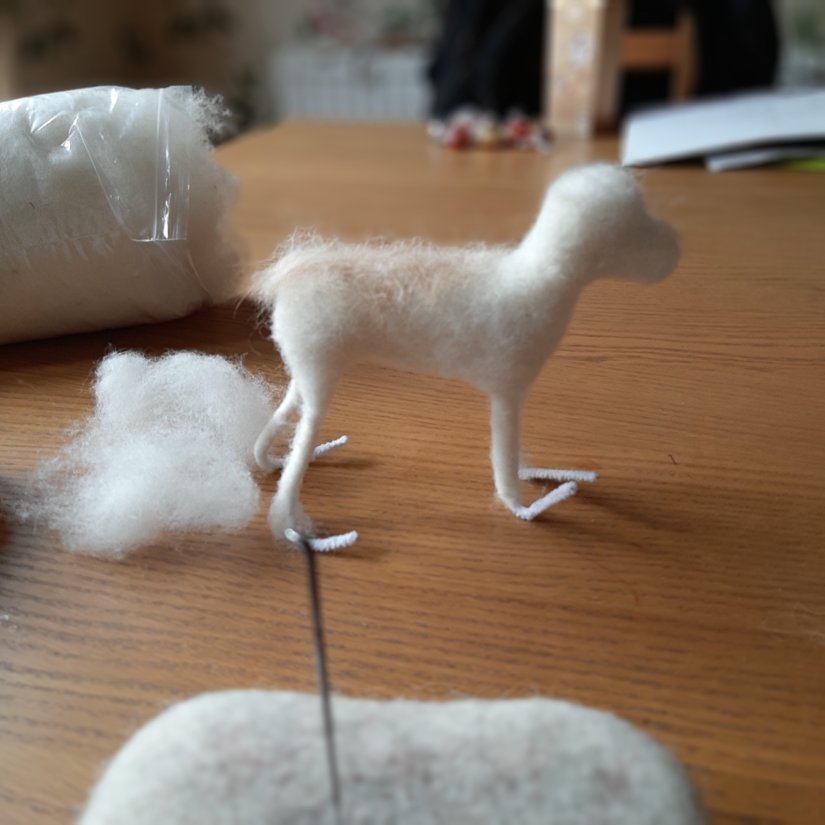
Felted Bruce started with a pipe cleaner armature to which I added a base layer of felted Shetland batt wool. I then started to add Bruce’s fur as a top layer. I started this even before I had finished off the dog’s feet as I was anxious to see just how feltable it was!

As well as the finer, more wiggly hairs from the soft undercoat, the fur contained a lot of longer straighter hairs that are more difficult to felt in. These hairs tend to stick out and as this was a smooth haired dog I took a bit of time felting over the body in an effort to get it to become smoother. The dog was mostly one colour but had some darker shades and some white patches. I initially tried to use the darker and lighter bits of fur to replicate the these but as the white parts of him did not look white enough, I added some white wool here. I also used wool for his eyes, nose and mouth.

To finish him I snipped off a lot of the sticky out hairs with scissors.

The way and the extent to which I use the dog fur depends on the amount, colouring and consistency of the fur. I like to keep in touch with the customer and let them know how I am using the fur and where I have used wool. Any left over fur is then returned with the dog.

Further blog posts will follow regarding felting with fur including one where I look at the difference between dog fur and dog hair!

felted mobile, needle felting

Getting there with my sheep mobile!

 It’s taking shape…

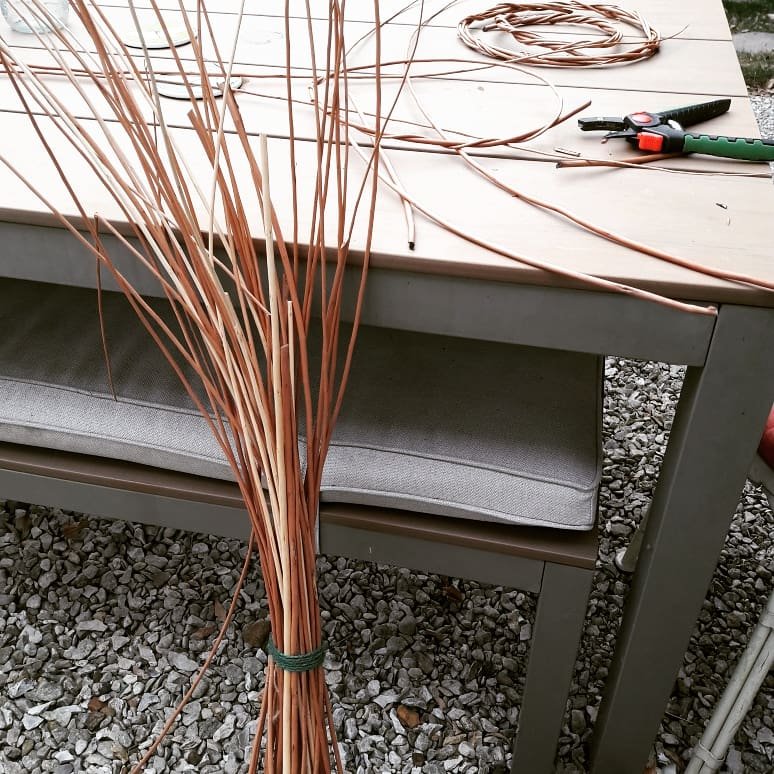
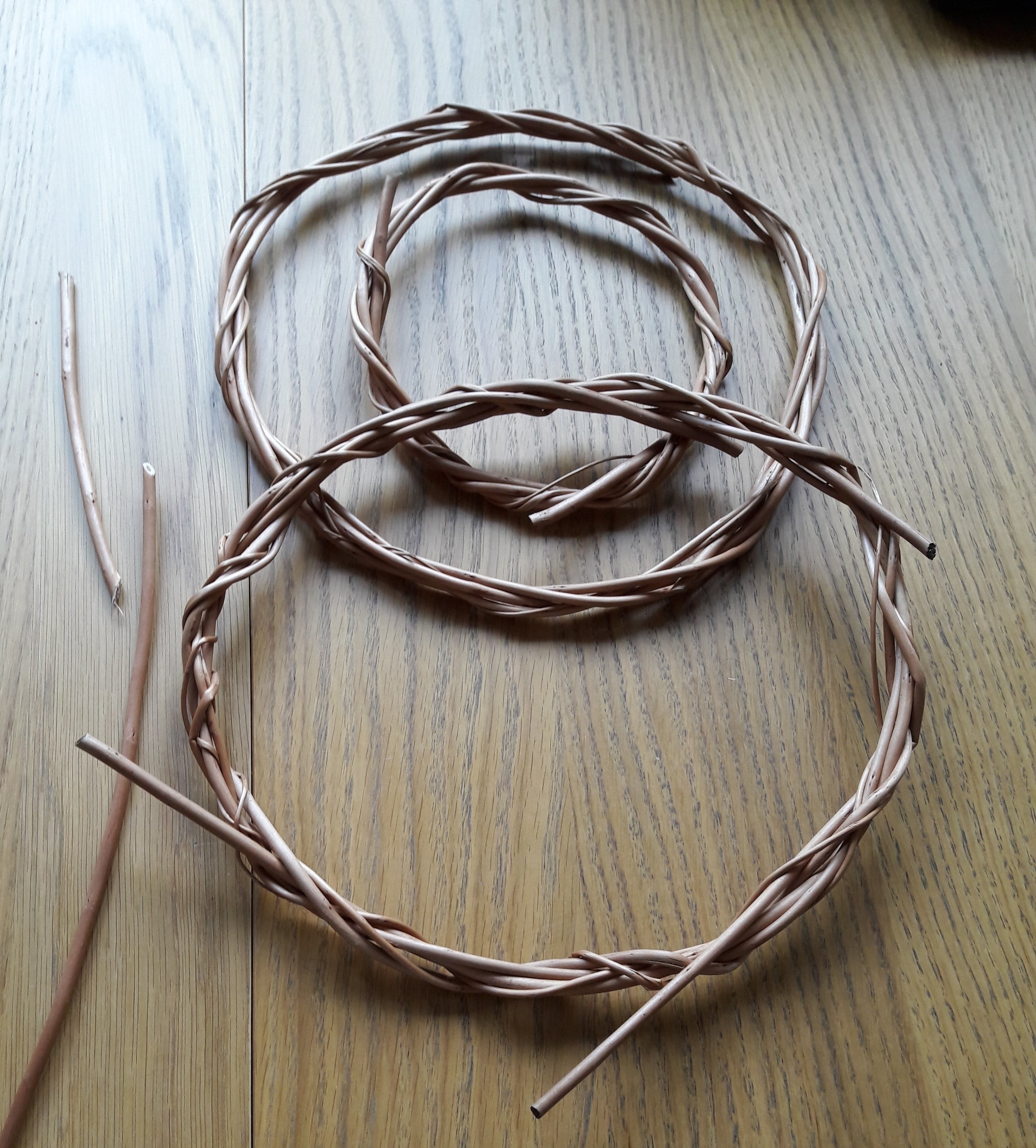
So I weaved some willow hoops, I used up all the sticks I’d soaked and ended up making three.

(Probably should have soaked the sticks for longer but I was soaking them in the bath and the youngest needed a shower!)

fb_img_15325056432282101965039.jpg

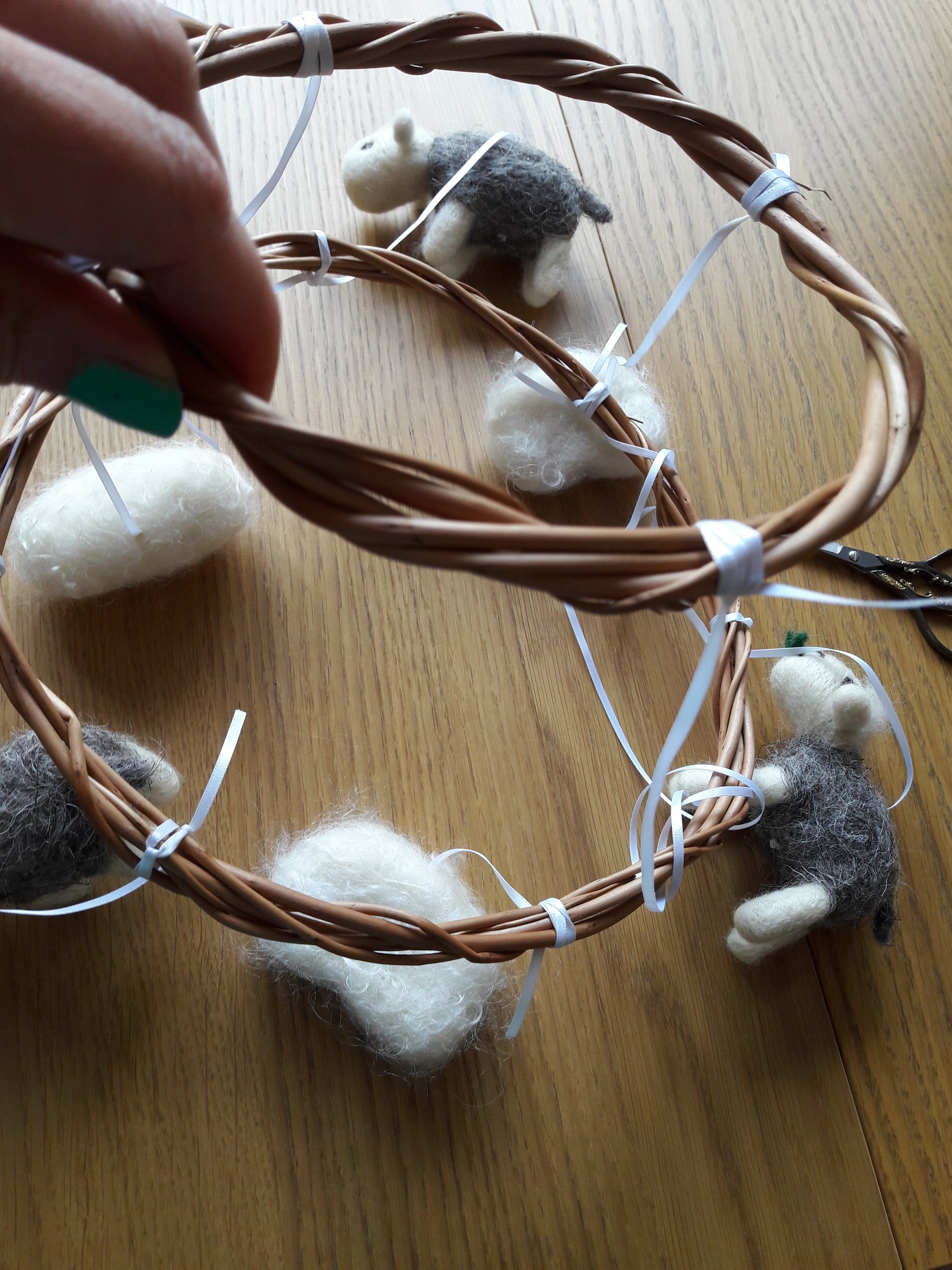
It was time to start attaching the felted sheep and clouds.

Sheep and clouds went onto the larger hoop first.

Then I attached the two hoops together ( this was the tricky part- balanced and level being hard to achieve) .

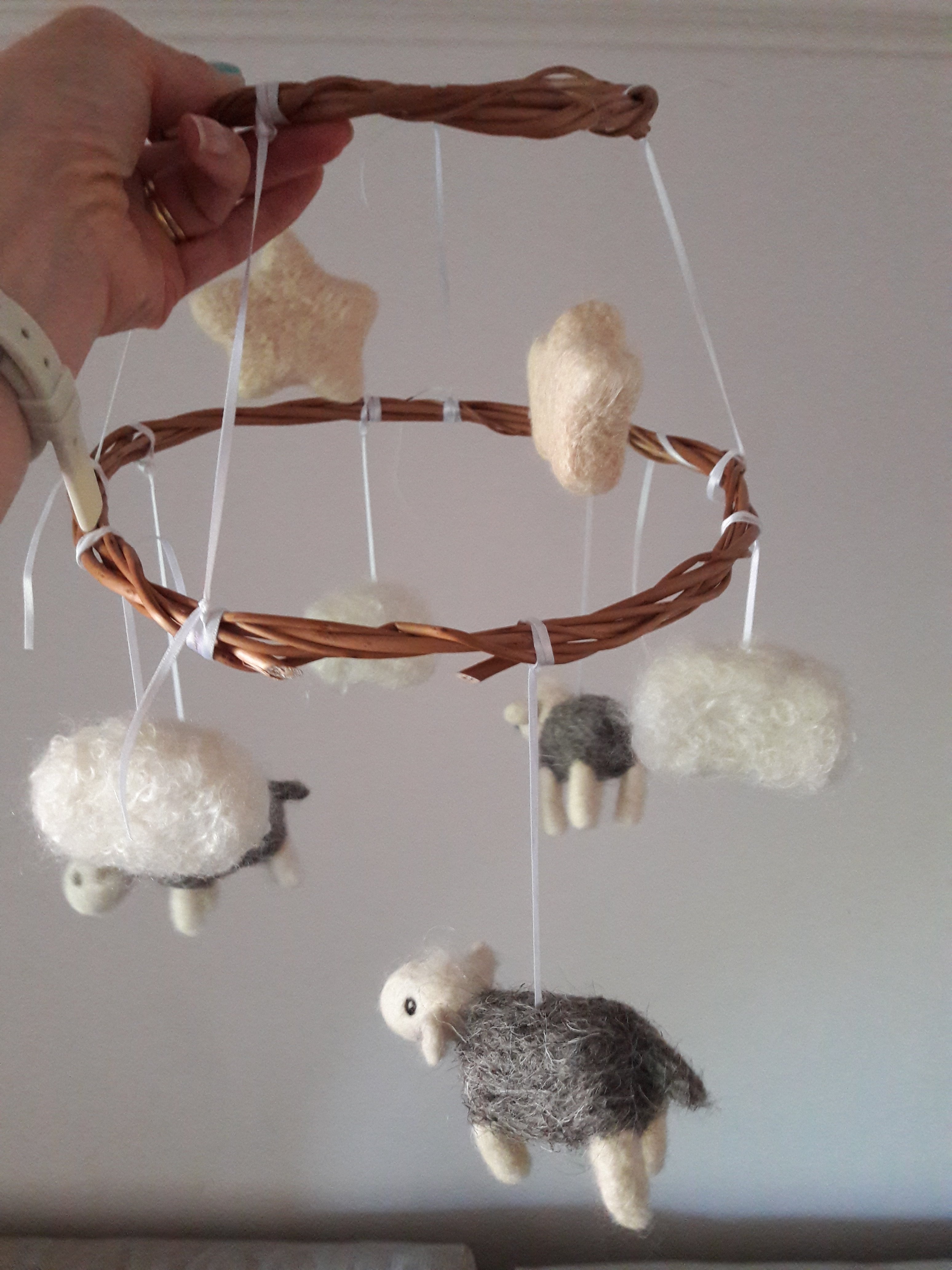
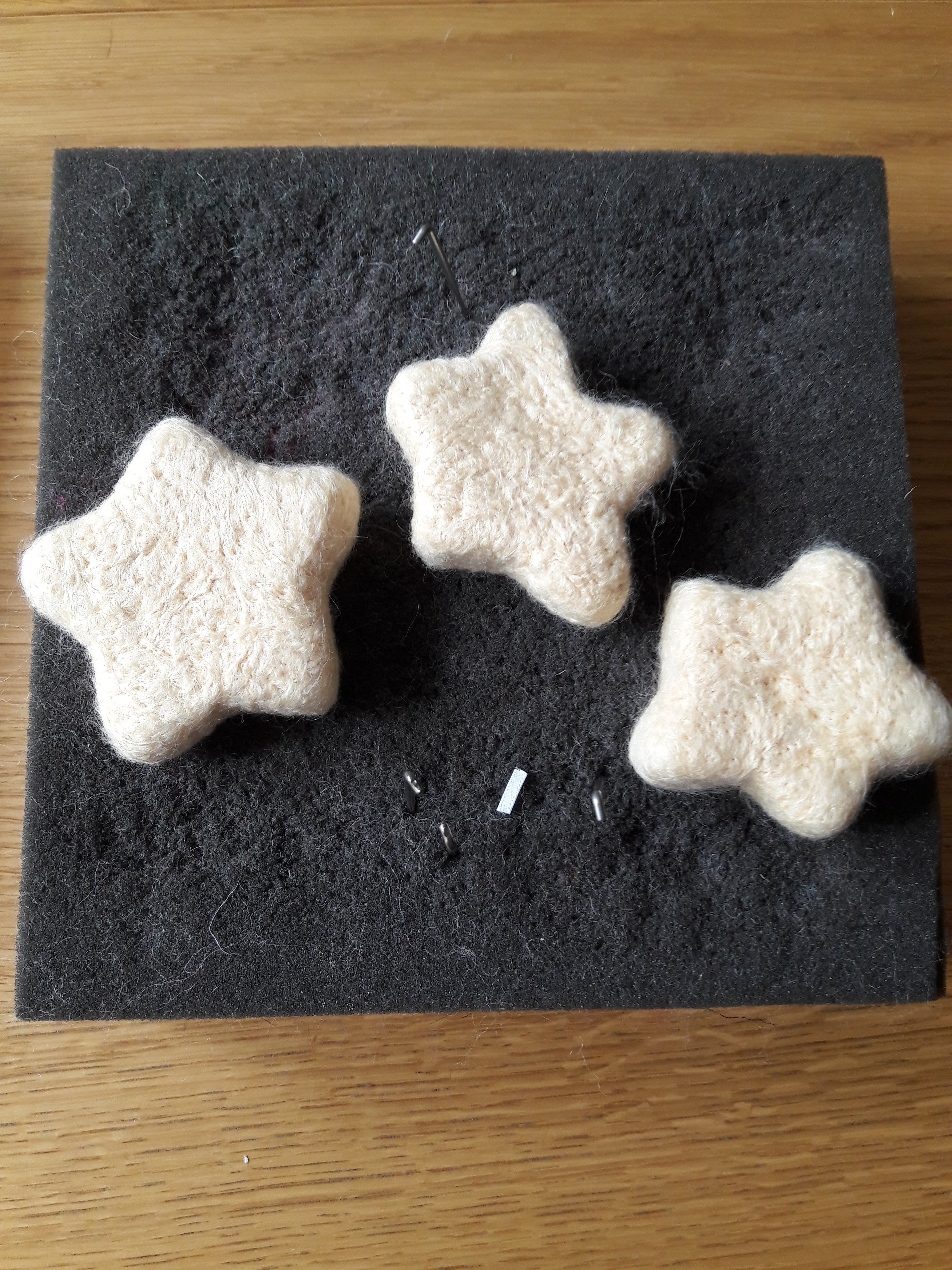
The stars threaded easily onto the invisible thread. In the last post I wrote about being unable to thread them with the ribbon, must have been the finer needle I was able to use, and attached two to the upper, smaller hoop.

The sheep, clouds and stars are now on three levels. Not my original intention but it makes sense right?

I’d made three stars but I think it will have to be two or four now to achieve balance…?

It’s something I’ll come back to, sometimes you need to step away from a project and come back with fresh eyes.

I also need to obviously trim the ribbons and neaten it up that way, in case your thinking  “she’s left it a bit messy looking”.. but will leave that to the very end.

Anyone else out there making a mobile? How’s it going for you?

I’ll keep you posted guys…

Thanks for reading! x

needle felting

Making a felted sheep mobile

Making progress…

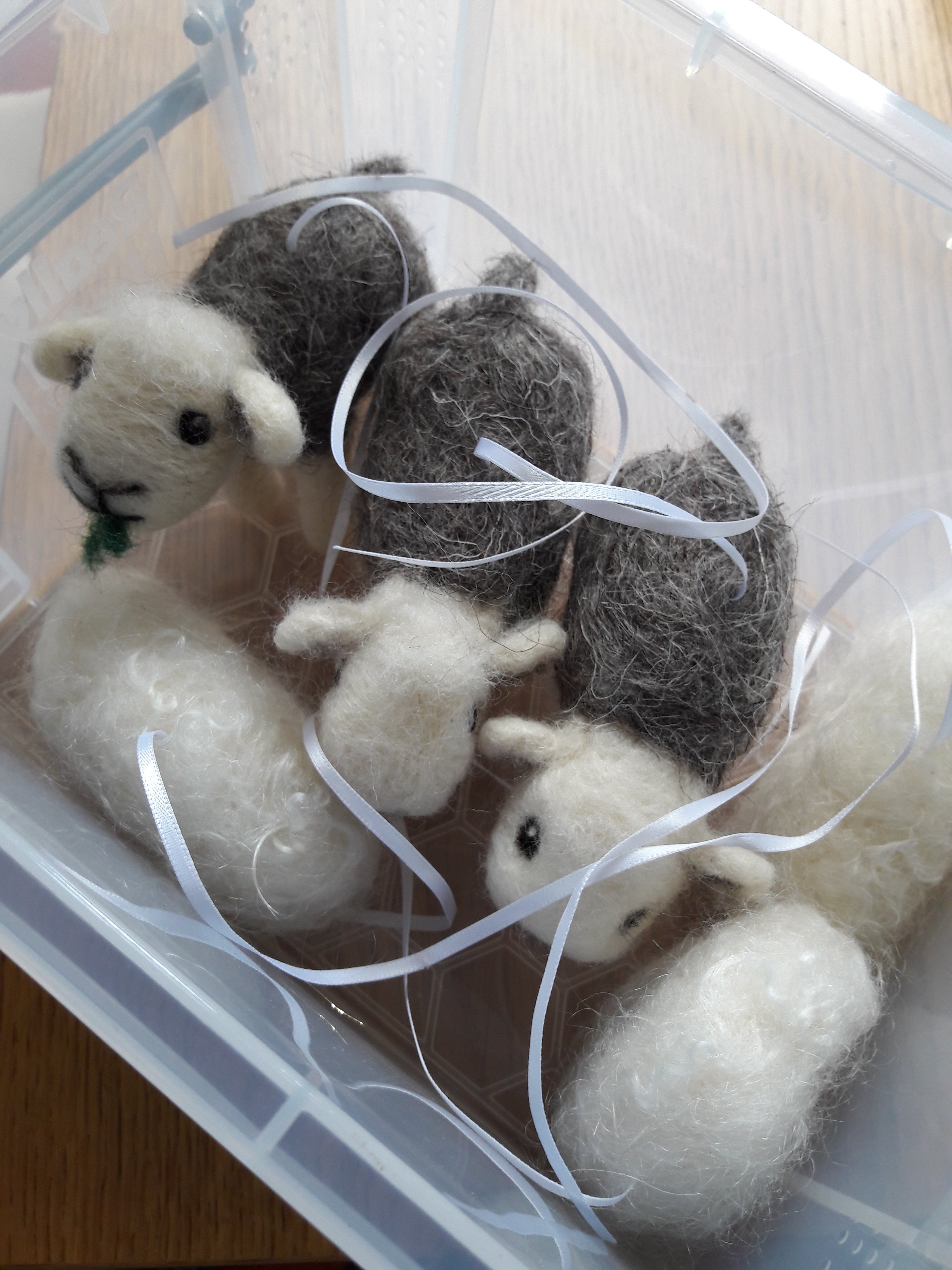
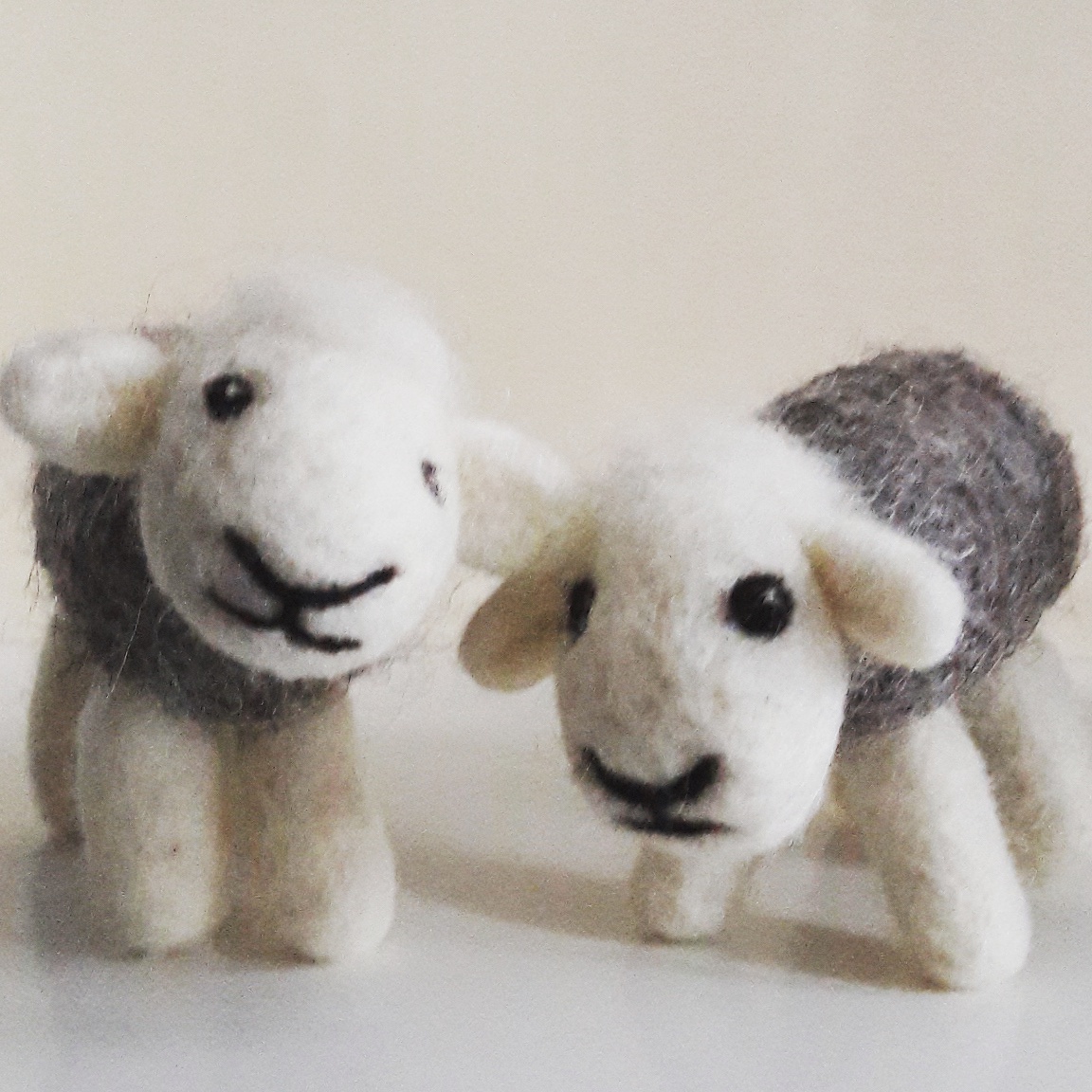
So I needle felted the parts of the mobile a while ago. I love making Herdwick sheep using Herdwick wool and I thought that some mini ones would be just right for a mobile. Counting sheep to get to sleep and all that.

I also made some clouds and added mohair fleece to make the texture curly and fluffy.

Stars were the final felted item, I actually used soya bean top which I’d bought in my exploration of vegan alternatives to wool. I found this really tricky to needle felt with but really love the finished result. All golden and super soft.

I left this project for a while, unsure of what to thread them onto the mobile with and mulling over the general structure. As you can see from the cloud picture, I went with white ribbon in the end. This threaded through my felted makes surprisingly easily , until I got to my soya bean stars!

No way would that needle and ribbon get through. I’m trying invisible thread next I think.

I also need to get up into that loft to get some willow sticks down to weave some hoops.

I’ll hopefully post soon with an update.

Thanks for reading!

craft fairs

How to survive a Craft Fair

IMG_20171119_122006_789
My first craft fair table set up. I used a tablecloth from home. This table had a Christmas theme so I enhanced it with battery operated candles, fairly lights and table gems.


Hello, I wouldn’t call myself an expert on craft fairs yet as I’ve only done four so far but hopefully if you’re a true beginner, or just wondering whether to have a go, you may find these tips useful.

  • It may sound obvious but do a bit of a reccy first to find out where you will be able to park and how far you will have to carry all your stuff.
  • Do a mock up of your display beforehand. Find out how big your table’s going to be, measure out that same space at home and set out your wares.
  • Pack everything up the night before, it might be an early start and you don’t want to be rushing round and possibly forgetting essential items.
  • Take a table covering. It can just be a sheet or table cloth or you might want to invest in buying some material that sets off your products well. If selling small delicate items such as jewellery keep it plain or your products will get lost in the pattern!
  • Take sellotape, pens, spare tags, scissors….
  • Find out when you’re allowed to start setting up and give yourself plenty of time so that you are not feeling rushed. If you have a bit of time left over before the customers start to arrive, you could use it to have a nose around the other stalls, chat to fellow stallholders, visit the loo, get a hot drink and you’re good to go!
  • Arrange your display at different heights. I bought a crate from Hobbycraft for £8 and put that on its side with some items inside and some on top. I have also turned a roasting dish upside down and covered it with material, and stood felted items on top of sparkly gift boxes. A bit of variety in height adds to the interest of your table.
  • Look up and smile at people who approach, even if you sense that they don’t particularly want to engage in conversation with you, at least you look approachable if they want to ask a question.
  • Take something to do. I always have a felting project with me. If I’m not making many sales, at least I’m being productive. Also it’s nice for people to watch how the items are made.
  • Its up to you whether you display your prices or leave it for people to ask you so that you have an opportunity to engage in conversation with them. I display my prices, I like to help potential customers out!
  • Take a lunch, a drink and some snacks to keep you going.
  • If you can , arrange for a friend to pop along to see you at lunchtime. If you’re feeling a bit nervous about the whole thing or worrying whether you’re ever going to sell anything, it can be reassuring to chat to someone you know. They can also mind your stall while you pop to the loo/grab a hot drink. (friendly fellow stallholders will also keep an eye on things for you if you need to step away)
  • Have a tub of change ready.
  • Invest in a card reader in case customers like your goods but are short on cash. I use a Zettle one. Advertise that you have one.
  • Wear layers if its likely to be chilly. Even if you’re indoors , if they have the doors open it can be draughty.
  • Consider wearing an apron with pockets so you have change, card reader, phone, pen etc to hand.
  • Think about what your customers are going to take your products home in. Most stall holders, including me, buy brown paper bags for this purpose. I have started personalising mine by buying alphabet stamps and stamping my shop name on them.
  • Have a stock of business cards/leaflets on your table.
  • Table prices vary and are often a reflection of how popular and therefore how much money you are likely to make from the fair. The really popular fairs in Liverpool where I live require applications months in advance.
  • Take paper and pen to make note of what you have sold/how much for. I write down a list of everything I am taking so that I can just cross it out. Some of my items are also listed in my Etsy shop. I write an E next to these to remind me so that I can delete it from my shop ASAP.
  • Have a range of different priced products out. a lot of people visiting craft fairs are not looking to spend a lot of money so have lower priced items ready so at least you can hopefully make a sale or two.


Don’t be despondent if you don’t sell much/anything at your craft fair. Some people are very successful at selling online but fairs just don’t work for them. It might be that that particular fair just isn’t right for what you’re selling, try another one. Maybe that same venue will be successful for you in nicer weather/in a different selling season. In other words, try two or three before you think about giving up!

Even if you don’t sell much, fairs are usually lovely places to chat with your fellow stallholders who will be like-minded people. You will get useful feedback (even if its non verbal, what items are customers mostly drawn to?) and positive comments and compliments from people looking at your stall. It may be that a customer takes away a business card or leaflet and then looks you up online and buys from you at a later date.

20180306_195252
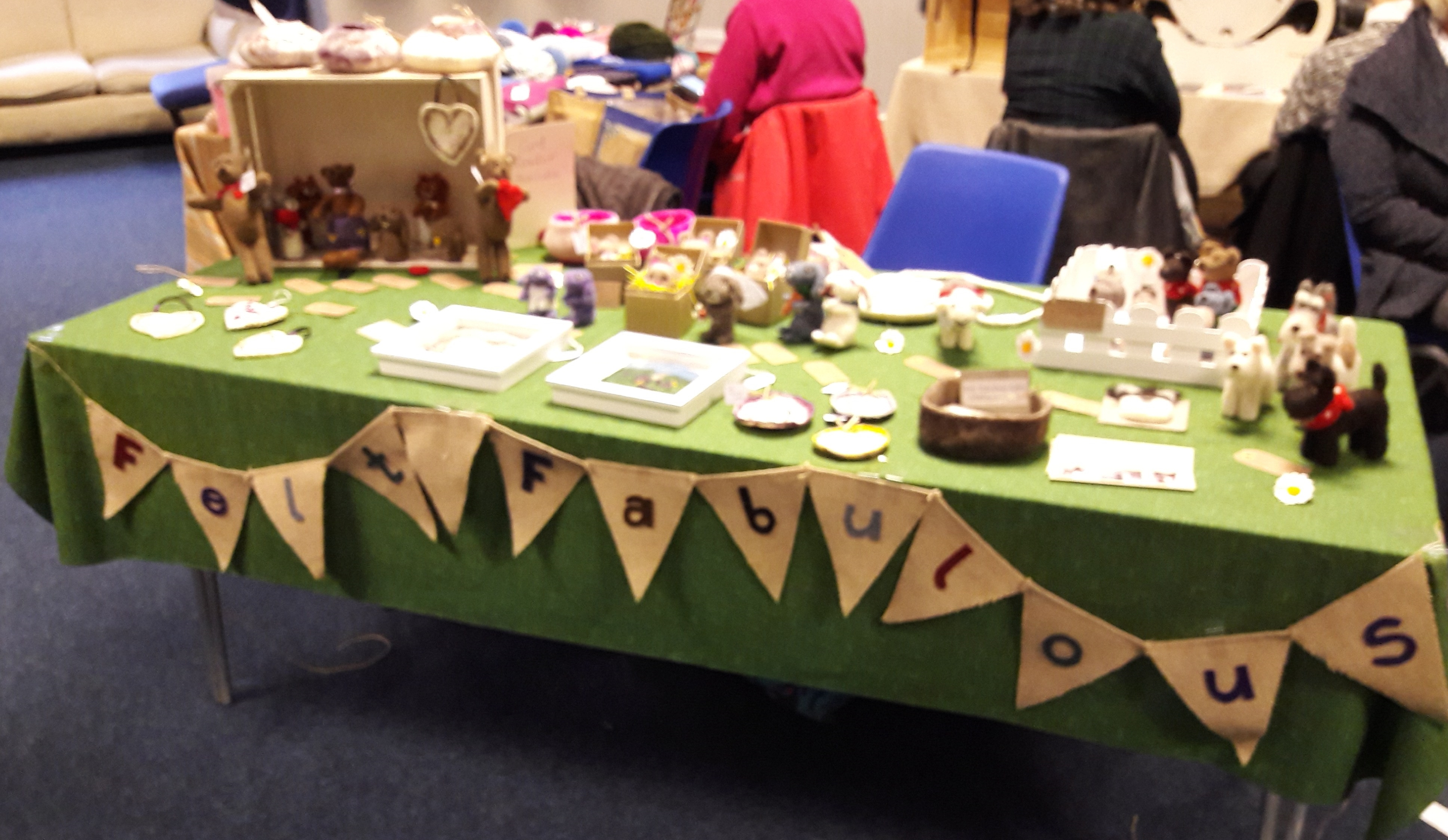
Apologies for the quality of the photograph but I wanted to include this to show my changes for a Spring craft fair. This time I have bought material in a spring/nature inspired green and enhanced it with paper daisies. I also bought a little fenced crate to put some of my dogs in. Enhancements from Hobbycraft.

I hope that you enjoy your fairs and remember, you will gain from the experience, even if it’s just a list of things to remember to do/not do next time! You may even make some money! Let me know how you get on.


wool

Using British Wool

Cruelty free wool?

Copy of 1180px x 360px – sheep banner 2I love animals and am a vegetarian. When I saw a post about someone using vegan materials to crochet with because they thought using wool was being unkind to animals, it made me stop and think.
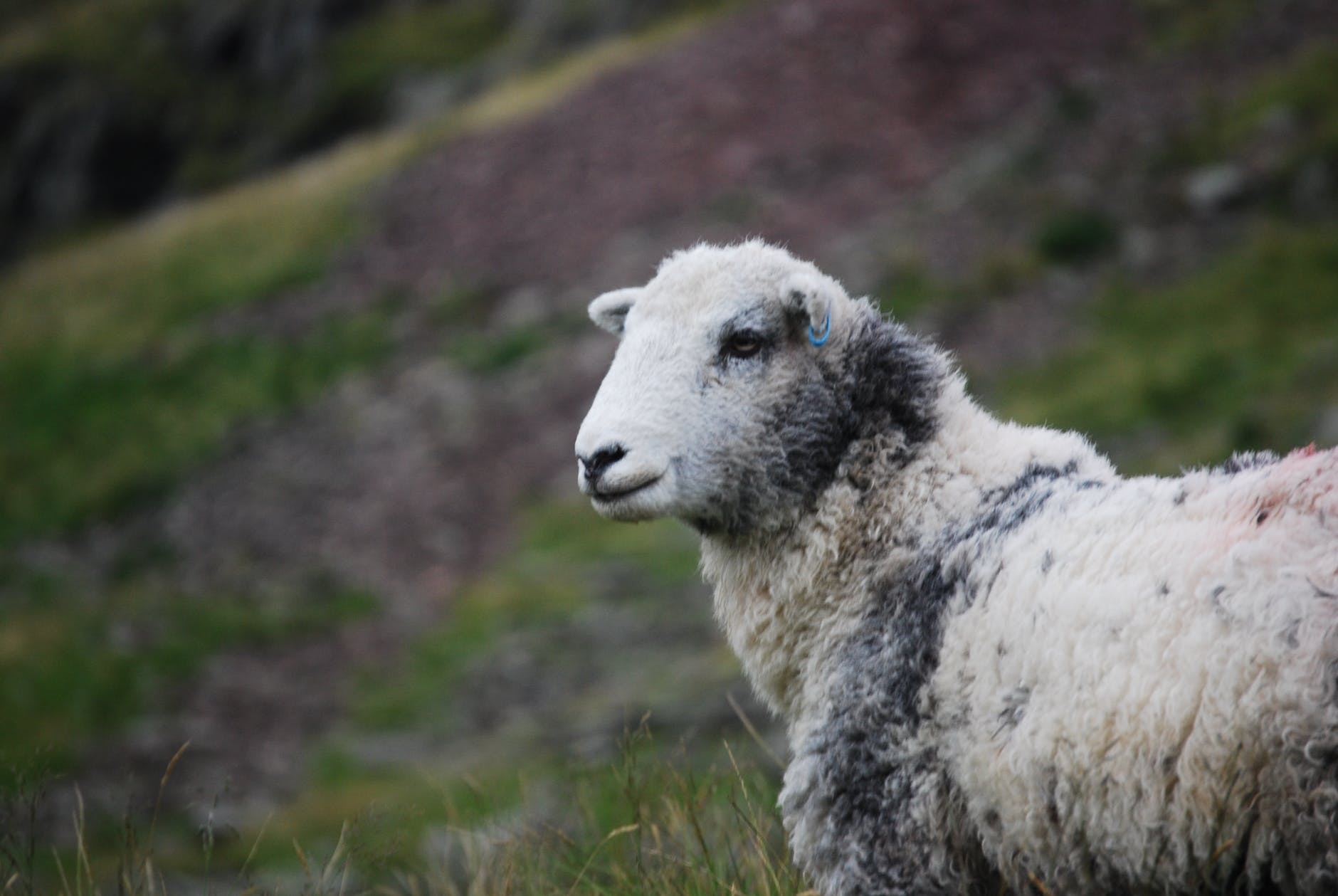
I love using wool and the fact that it is a natural material, I love the feel and smell of it. I wanted to know if I could be more ethical and animal friendly whilst still using wool.

pexels-photo-88141.jpeg

My learning journey..

When I first started felting I bought “wool” from Hobbycraft. As time went on, and I started buying from more specialist wool shops, I started noticing differences in the textures of the wools and that wool came from different breeds!

Looking into sheep friendly wool, I came across the organisation British Wool.

What’s so good about British Wool?

  • They promote high standards of animal welfare
  • They provide shearing skills training to their wool producers
  • They educate on best industry standards

and also worth bearing in mind…

  • UK sheep farms are small, the farming is not intensive
  • The sheep are raised naturally outdoors on pasture

They have detailed Welfare regulations on their website and excellent information on the 60 breeds of sheep that we have in the U.K.! Phew! Looks like I have a lot more learning to do!

Where can I buy it?

Looking to buy British Wool? I can thoroughly recommend the excellent online shop “World of Wool”. It sells a wide range of natural and dyed wool. The British Wool symbol is displayed on all the relevant wools making it easy to search for. Another useful source of information about British wools and their qualities.

IMG_20180112_154916_246

Herdwick sheep made using Herdwick wool!


What about merino wool?

Merino wool – people often wonder about whether this is cruelty free, as mulesing is a cruel practice that happens at some merino sheep farms. Please be aware of this and buy your merino wool from sources that buy from non mulesed sheep farms, as I do.


1494244419249549
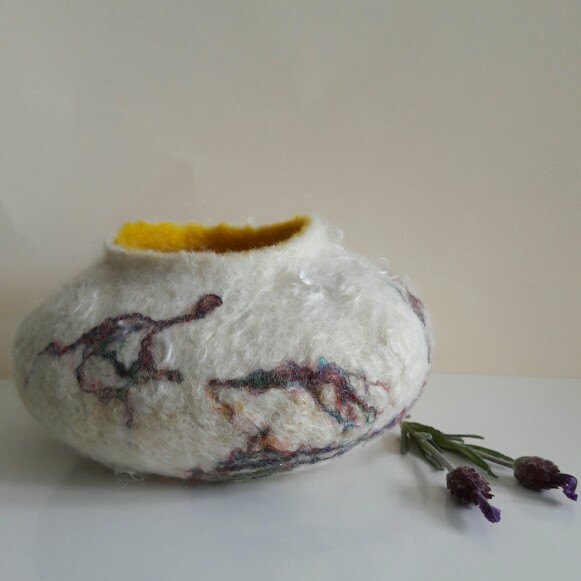
Yellow merino wool on the inside adds a pop of colour


So, next steps for me?

  • To continue to search for, buy and use British wool wherever I can.
  • To look into buying from individual British farms and farmers, where I can be assured of the animal’s welfare
  • To consider some vegan options and alternatives
  • To continue to specify the type of wool I use in my felted products


Felted bowls

Felting bowls makes me happy

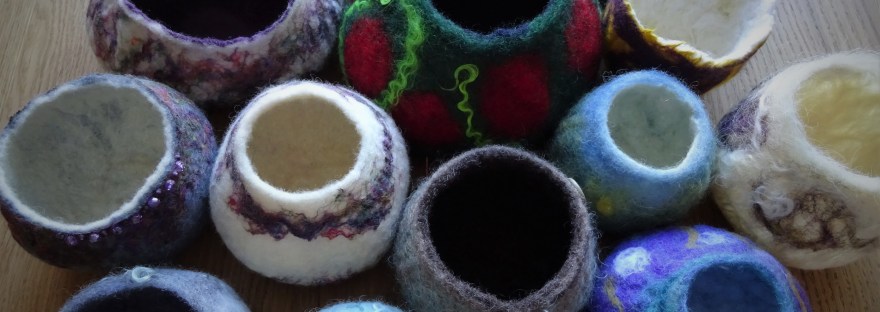
I love felting bowls.

Bowls, vessels, pods…. whatever you call them, I just love making them.


I wet felt them using a resist method, a process that is now second nature to me. I just set up in the kitchen (best place because it can get pretty wet and soapy), put some tunes on and go! You can do the rubbing and rolling parts quite aggressively too if you have some pent-up tension inside you!

The fulling stage comes next and is one that I really enjoy. This is where I gather my tools (anything with a rounded or curved edge, spoons, ice cream scoops etc) and rub at the wool to firm up the shape of it. (A good felted bowl is always soft but shouldn’t be floppy!) It’s exciting to see the shape of the bowl start to appear, from the felted wool that was round and flat.

Ok, you can’t put your soup in them (but I now have a hankering to try out making ceramic bowls….), but they are great for putting a tea light in. PLEASE make sure it is a battery operated one though! The light just loves to glow through the wool.

Because they are made from wool, they are safer for children’s bedrooms too. Try breaking one, you can’t! Nice and soft for jewellery and watches too.

I use a variety of wool colours and types to make my bowls. It’s always good to learn new things and learning about the different wools and their textures has been really interesting.

If you like felt bowls too, or are just curious, have a look at my felt bowls in my Etsy shop, Felt Fabulous Gifts. There are also some pictures there that show some of the process of making them.

Thanks for reading!

http://www.feltfabulousgifts.etsy.com